
Big Brother Got a Makeover: Immigration Agents Are Sporting Meta Smart Glasses
DHS agents across six US states are wearing Meta Ray-Ban smart glasses during immigration raids and protests, with no official contract or clear authorisation.












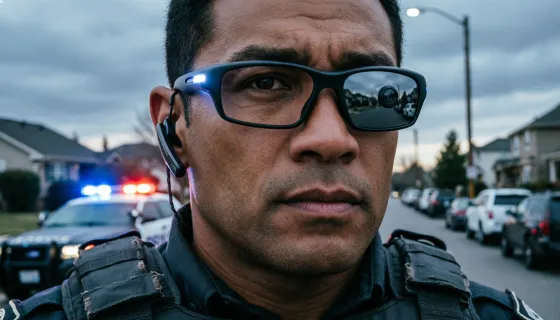
When George Orwell imagined a surveillance state, he probably pictured something grimmer than Ray-Ban Wayfarers. Yet here we are: immigration enforcement agents across the United States have been spotted wearing Meta's AI-powered smart glasses during raids, protests, and arrests, and nobody in government seems entirely sure who authorised it.
Fashion-Forward Policing
Since Trump returned to office, DHS agents in at least six states, including California, Illinois, North Carolina, New Jersey, Louisiana, and Minnesota, have been photographed wearing Meta Ray-Ban smart glasses while on duty. The glasses, which retail from $379, look near-identical to standard sunglasses but pack cameras, microphones, and an AI assistant behind those tinted lenses.
Here is the kicker: the Department of Homeland Security has confirmed it holds no contract with Meta for the devices. Agents appear to be purchasing them personally and strapping them on during operations. It is the bring-your-own-device trend, except the device can covertly film the people you are detaining.
Caught on Camera, Catching on Camera
The first documented incidents emerged through sharp-eyed journalists. In June 2025, a CBP agent wore Meta glasses during a raid near a Home Depot in Cypress Park, Los Angeles, spotted by 404 Media. By December, Border Patrol agents were filmed using the glasses to record protesters at another Home Depot in Evanston, Illinois, and during an immigration raid in Charlotte, North Carolina.

The irony is rich. Former Homeland Security Secretary Kristi Noem declared in July 2025 that filming agents constitutes a form of violence, telling reporters in Tampa that videotaping officers "where they're at when they're out on operations" threatens their safety. Apparently the reverse does not apply.
The Bigger Surveillance Picture
The smart glasses are just one thread in a rapidly expanding surveillance tapestry. About 3,000 ICE officers are currently equipped with government body cameras, with another 6,000 being rolled out across the agency's 13,000-strong workforce. CBP has also signed a one-year deal with Clearview AI, granting access to its database of over 60 billion public images through 15 software licences.
Then there is Palantir. DHS holds at least $1 billion in contracts and purchasing agreements with the data analytics firm co-founded by Trump donor Peter Thiel. White House adviser Stephen Miller has disclosed a personal investment in Palantir valued between $100,001 and $250,000, which does rather complicate the optics.
What Makes the Glasses Different
Body cameras are visible, regulated, and their footage is subject to oversight policies. Meta smart glasses are none of those things. Hackers have demonstrated that the small privacy LED, the only indicator someone is being recorded, can be easily disabled. Harvard researchers showed in 2024 how the glasses could be paired with facial recognition tools to identify strangers in real time.
Meta is reportedly exploring whether to officially add facial recognition to the glasses through a feature internally called "Name Tag," according to The New York Times. Three Democratic senators have since pressed the company on these plans. The Electronic Frontier Foundation has urged consumers to think twice before buying a pair.
A Chilling Context
This all unfolds against a backdrop of escalating enforcement. Nearly 400,000 immigrants have been arrested over the past year, and two fatal shootings by federal agents in Minneapolis in January 2026 have heightened tensions. ICE agent Jonathan Ross fatally shot Renee Good on 7 January, and CBP officers killed Alex Pretti, a VA intensive care nurse, on 24 January as he observed operations.
ICE chief Todd Lyons testified before the Senate on 12 February about agents recording video during operations, but offered little clarity on smart glasses specifically. A reportedly leaked September national security memo listing criticism of "law enforcement and border control" as a domestic terrorism indicator only deepens the unease.
When the watchers insist they cannot be watched, but quietly upgrade their own eyewear to do just that, it is worth asking: who exactly is the surveillance state designed to protect?
Read the original article at source.