
An Awkward Handshake at Guantanamo: Why US and Cuban Officials Are Talking Again
A rare interaction between US and Cuban military officials at Guantanamo Bay hints at underlying pragmatism despite rising political tensions.










A Surprising Diplomatic Detour
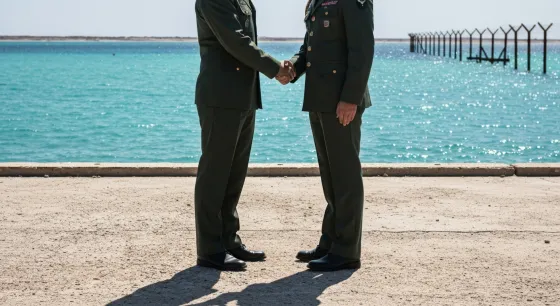
In the world of international relations, things rarely happen by accident. So, when the top US commander for Latin America found himself in a brief exchange with Cuban military officials near the Guantanamo Bay naval base, it naturally raised a few eyebrows. This wasn't a state dinner or a grand peace summit; it was a quick, functional chat about operational security. But in the current climate, even a polite nod between these two nations feels like a significant plot twist.
The Trump Factor
It is impossible to ignore the elephant in the room: Donald Trump. As the former President continues to exert pressure on the island nation, the political temperature between Washington and Havana remains stiflingly high. Trump’s approach to Cuba has always been heavy on rhetoric and sanctions, aiming to squeeze the government rather than engage in dialogue. Seeing a US commander on the ground talking to Cuban counterparts while the political rhetoric remains so combative creates a fascinating, if confusing, contradiction.
Why This Matters to the Rest of Us
You might be wondering why a brief chat at a military base matters to anyone outside of the Pentagon or the Cuban Ministry of the Revolutionary Armed Forces. The answer lies in regional stability. Cuba is not an isolated island in a political sense; its influence, particularly regarding its ties to Venezuela and the broader Latin American geopolitical landscape, remains a point of contention for US foreign policy.
When US and Cuban officials communicate, it is usually a sign that they are trying to prevent a bad situation from becoming a catastrophic one. Operational security is military speak for keeping things from spiralling out of control. It suggests that despite the noise from political campaigns and aggressive press releases, there is still a baseline level of pragmatism required to keep the lights on and the borders secure.
The Reality of the Situation
Let us be clear: this meeting does not signal a new era of friendship. The US embargo remains, and the ideological divide is as wide as the Florida Straits. However, the fact that these lines of communication remain open is arguably more important than the actual content of the conversation. In diplomacy, silence is often the precursor to conflict. A brief, professional exchange is a way of saying, We see you, we are watching, and let us make sure we do not accidentally start a war today.
What to Watch Next
As we head into an unpredictable political cycle, expect the relationship between the US and Cuba to remain a political football. The administration will likely continue to walk a tightrope, balancing the need for hardline domestic posturing with the necessity of maintaining basic security protocols in the Caribbean. If you are looking for a shift in policy, do not hold your breath. But if you are looking for evidence that the two sides are at least keeping their eyes on the ball, this brief encounter is your answer.
Read the original article at source.