
Why the Northern Lights Turned Britain Into a Light Show This Week
A G3 geomagnetic storm brought the Northern Lights as far south as southern England in March 2026. Here is what caused the display and what each colour means.










The Sky Put On a Show, and Britain Had Front-Row Seats
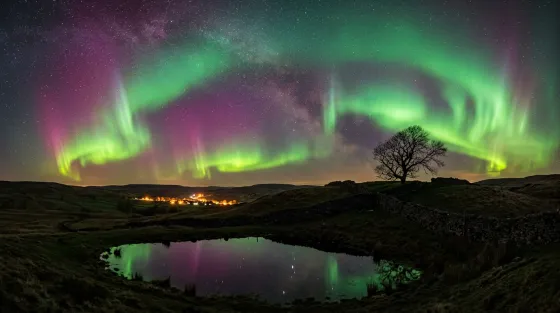
If your social media feed has been awash with ethereal greens, vivid reds, and the occasional flash of purple over the past few days, you are not imagining things. The Northern Lights made a spectacular appearance across the UK from Friday 20 March through to Monday 23 March 2026, treating stargazers as far south as southern England to a display that most of us only expect to see on a trip to Iceland.
The culprit? A G3 (strong) geomagnetic storm that peaked at a Kp index of 7, triggered by multiple coronal mass ejections (CMEs) that departed the Sun on 16 and 18 March. By the time that charged solar material slammed into Earth's magnetic field, the result was one of the most widespread aurora events the UK has seen in years.
What Makes the Colours So Different?
Here is the bit that genuinely fascinates me. The aurora is not just one colour randomly splashed across the sky. Each hue is a direct result of solar energy colliding with specific gases at specific altitudes, and the palette tells you exactly what is happening up there.
Green
The classic aurora colour. Green light appears when solar particles strike oxygen molecules between 60 and 120 miles above Earth. It is the shade most commonly captured in photographs and the one you are most likely to spot with the naked eye.
Red
Spot red and you are looking at something special. This colour forms above 150 miles altitude, again from oxygen, but at such heights it signals a particularly strong geomagnetic storm. If red dominates the display, conditions are genuinely intense.
Purple
Purple emerges between 60 and 100 miles up, where solar energy meets nitrogen rather than oxygen. It often appears as a lower fringe beneath the green, creating that layered, almost painterly effect in the best photographs.
Blue
The rarest of the lot. Blue aurora occurs below 60 miles, caused by ionised nitrogen at very low altitudes. If you managed to capture blue in your shots last weekend, consider yourself exceptionally fortunate.
Where Were the Best Sightings?
Reports flooded in from across the country, with sightings reportedly reaching Aberdeenshire, Moray, and Portsoy in Scotland, while confirmed photographs emerged from Norfolk locations including Cromer, Happisburgh, and Horsey. The aurora was even visible from London, which tells you just how powerful this particular storm was.
Across the Atlantic, skywatchers in New York also caught the display, and observers in northern France were treated to views as well. Not a bad reach for a phenomenon we typically associate with the Arctic Circle.
Why March 2026 Is a Big Deal for Aurora Hunters
This is not just a lucky one-off. March 2026 sits right in the sweet spot for Northern Lights activity, and there are two good reasons for that.
First, we are riding the peak of Solar Cycle 25, a period of heightened solar activity that has been building since late 2024. Earlier this year, a G4 (severe) storm in January produced the largest solar radiation storm in 23 years, so the Sun has been in a particularly lively mood.
Second, there is the Russell-McPherron effect. Around the equinoxes in March and September, Earth's magnetic field aligns in a way that allows more efficient coupling with the solar wind, essentially making it easier for solar storms to trigger auroras. Some experts have described March 2026 as potentially the best month for Northern Lights sightings until the mid-2030s.
Will It Happen Again Soon?
Unfortunately, the party appears to be winding down for now. Solar activity has dropped from G3 to G1 conditions, with only six C-class flares recorded in the 24 hours following the main event, the strongest being a modest C2.0 from active region AR4401. The Met Office Space Weather Prediction Centre has forecast only a low chance of aurora visible in northern Scotland over the coming nights.
That said, with Solar Cycle 25 still near its peak, more opportunities will come. If you missed this round, keep an eye on space weather forecasts and be ready to head somewhere with dark skies at short notice. The Northern Lights rarely send calendar invitations.
Read the original article at source.