
Talks to End the Iran War? Iranians Aren't Exactly Popping the Champagne
Trump claims progress in US-Iran war talks, but Tehran denies negotiations entirely. Here is what Iranians actually think about the diplomatic drama unfolding.












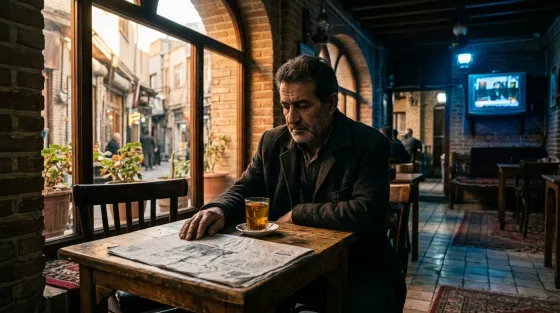
The US-Iran war is now nearly a month old, Trump says talks are going swimmingly, and Iranians have thoughts. Quite a few of them, actually, and they do not all agree.
On 23 March 2026, Donald Trump took to Truth Social to announce "GOOD AND PRODUCTIVE CONVERSATIONS" with Iran, claiming, without independent verification, that the two sides had reached 15 points of agreement. He even ordered a five-day postponement of planned strikes on Iranian power plants, apparently as a goodwill gesture. Brent crude promptly dropped around 13%, falling to roughly $99 per barrel from nearly $114. Markets, it seems, are more optimistic than the people actually living through this.
Tehran Says: Absolutely Not
Iran's response was a resounding denial. Parliament Speaker Mohammad Bagher Ghalibaf called the whole thing "fake news," posting on X that "no negotiations have been held with the US." He accused Trump of trying to "manipulate the financial and oil markets." Iran's Foreign Ministry spokesman Esmaeil Baghaei took a slightly softer line, denying direct talks but acknowledging that messages had been received through intermediaries from friendly countries. Pakistan, Egypt, and Turkey have all been playing postman in this diplomatic saga, with Pakistan's PM Shehbaz Sharif publicly offering to host talks on 24 March.
The IRGC, never ones for diplomatic understatement, branded Trump a "deceitful American president." Which, regardless of your politics, does suggest the mood in Tehran is not exactly conciliatory.
A Nation Divided Down the Middle
Here is where it gets properly complicated. Since the conflict began on 28 February 2026, Iranians have found themselves split along lines that run far deeper than simple pro-war or anti-war sentiment.
Many Iranians who have fled the country expressed relief at the postponement of strikes on power plants. Nobody wants their relatives sitting in the dark. But a significant number also voiced a pointed concern: that any deal struck between Washington and Tehran might simply prop up the current regime. Several have urged Trump not to negotiate with the government at all, instead calling for support for "a nationwide struggle for freedom and democracy."
On the other side, plenty of Iranians are simply furious at the US-Israeli bombing campaign. Nearly 350 children have been killed in the conflict so far, with over 200 in Iran and more than 100 in Lebanon. Over one million people have been displaced in Lebanon alone. When your neighbourhood is rubble, the finer points of geopolitical negotiation tend to feel rather abstract.
Why the Scepticism Runs So Deep
Iranian distrust of American negotiating sincerity is not exactly unfounded. Nuclear talks had been progressing in Geneva in late February, with Oman's foreign minister announcing a "breakthrough" on 27 February. The very next day, the US and Israel launched strikes on Iran. Previous negotiation rounds in June and October were also followed by US military action. Former US Deputy Secretary of State Wendy Sherman said on 24 March that she is pessimistic about the war ending soon, noting Iran has become "more hardline, not less so" as a result of the conflict.
Hassan Ahmadian, a professor at the University of Tehran, has suggested Trump used the talks claim as a face-saving way to walk back his 48-hour ultimatum on the Strait of Hormuz. An Iranian source told CNN that Washington initiated "outreach" but "nothing that has reached the level of full-on negotiations," adding that Iran "is willing to listen if a plan for a sustainable deal comes within reach." Iran is now reportedly demanding war reparations, a condition that was not on the table before.
What Happens Next
A possible meeting in Pakistan around 26 March has been discussed, with Vice President JD Vance potentially attending. The US has reportedly set 9 April 2026 as a target date to conclude the war. Whether that timeline survives contact with reality remains to be seen. For now, Iranians are left parsing contradictory signals from two governments that cannot even agree on whether they are talking to each other.
Read the original article at source.