
Pope Leo XIV Denounces 'Delusion of Omnipotence' as He Intensifies Calls for Peace in Iran Conflict
Pope Leo XIV delivers his sharpest rebuke of the US-Israel military campaign in Iran, calling for peace during a vigil timed to coincide with Pakistan negotiations.


A Pontiff's Sharpest Rebuke Yet
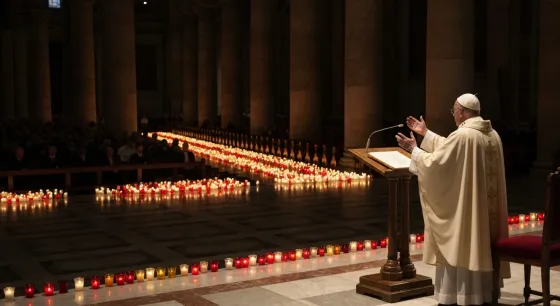
Pope Leo XIV delivered his most forceful condemnation of the US-Israel military campaign in Iran during a solemn evening prayer vigil at St Peter's Basilica on Saturday 11 April 2026. The first American-born pope, originally from Chicago, used the service to decry what he called a "delusion of omnipotence" driving the conflict, urging world leaders to abandon the path of destruction.
"Enough of the idolatry of self and money! Enough of the display of power! Enough of war!" the pontiff declared before a packed congregation that included senior diplomats and clergy from across the globe.
Vigil Timed to Coincide with Pakistan Negotiations
The prayer service was not scheduled by accident. It coincided with the start of face-to-face US-Iran negotiations in Pakistan, lending the Vatican's intervention a distinctly diplomatic edge. A fragile two-week ceasefire, announced around 8 April, was holding at the time of the vigil, though few observers expressed confidence it would last without sustained political will on both sides.
Among those present was Cardinal Dominique Joseph Mathieu, the Belgian-born Archbishop of Tehran, whose attendance underscored the direct impact the conflict is having on Christian communities in the region. Reports also suggest a senior US Embassy official attended, though this has not been independently confirmed beyond initial press pool accounts.
An Escalating Pattern of Criticism
Saturday's vigil was the culmination of a clearly intensifying series of papal interventions over the preceding week:

5 April: Pope Leo used his Easter address to call broadly for peace in the Middle East.
7 April: Speaking from Castel Gandolfo, he branded President Trump's threat to destroy Iran's "whole civilisation" as "truly unacceptable."
8 April: The Vatican welcomed the announcement of a two-week ceasefire.
10 April: The Pope stated plainly that "God does not bless any conflict."
11 April: The St Peter's vigil, featuring the "delusion of omnipotence" condemnation.
The trajectory is unmistakable. What began as measured appeals for restraint has evolved into direct, pointed criticism of the justifications being offered for military action.
Pushing Back on Religious Justification for War
One thread running through Pope Leo's remarks is a clear rejection of attempts to frame the conflict in religious terms. US Defence Secretary Pete Hegseth has repeatedly invoked Christian faith when portraying America's role in the campaign, positioning the US as a Christian nation acting with moral authority.
The Pope has consistently and firmly rejected this framing. His insistence that God does not endorse any war is a direct counter to the rhetoric emerging from Washington. It places the Vatican squarely at odds with an administration that has sought to wrap military action in the language of divine purpose.
Wider Solidarity Across Catholic Communities
The vigil was not confined to Rome. The US Conference of Catholic Bishops, led by Archbishop Coakley, invited parishes across the United States to hold simultaneous prayer services in solidarity. Reports indicate that congregations in several other countries followed suit, turning the event into a global expression of opposition to the conflict.
This coordinated response signals something beyond one pope's personal conviction. It reflects a broader institutional stance from the Catholic Church, one that carries considerable soft power in a conflict where moral authority is being fiercely contested by all sides.
What Comes Next
With negotiations underway in Pakistan and a ceasefire that remains precarious at best, the Vatican's interventions are likely to continue. Pope Leo has shown no sign of tempering his language, and the diplomatic stakes are only rising. The concern within Vatican circles extends beyond Iran itself to the potential spillover into Lebanon and the wider region, where Christian communities face particular vulnerability.

Whether papal pressure can meaningfully shift the political calculus in Washington or Tehran remains an open question. But Pope Leo XIV has made one thing abundantly clear: the world's largest Christian institution will not lend its blessing to this war.
Read the original article at source.