
The Philippines Just Declared an Energy Emergency, and the Rest of Asia Should Be Taking Notes
The Philippines has declared a national energy emergency over the Iran conflict. With oil imports from the Middle East near 98%, fuel prices are soaring. Here is what it means for Asia.







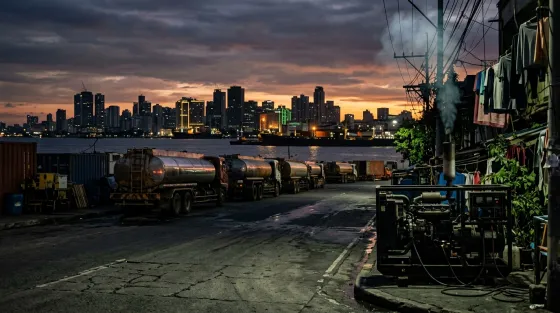
The Philippines has become the first country on Earth to formally declare a national energy emergency in response to the ongoing Iran conflict. And frankly, it probably will not be the last.
President Ferdinand Marcos Jr signed Executive Order 110 on 24 March 2026, citing "imminent danger" to the country's energy supplies. When a nation that imports 95 to 98 per cent of its oil from the Middle East watches the Strait of Hormuz effectively slam shut, "imminent danger" might actually be an understatement.
How We Got Here
The crisis traces back to 28 February 2026, when joint US-Israeli strikes hit Iran, killing Ayatollah Ali Khamenei. Iran's response was swift and predictable: missile and drone attacks, followed by restrictions on shipping through the Strait of Hormuz, the 21-mile-wide chokepoint that normally handles over 20 million barrels of oil per day. That is roughly a quarter of the world's entire seaborne oil trade, suddenly in jeopardy.
For the Philippines, this is not an abstract geopolitical problem. It is a kitchen-table crisis. Domestic fuel prices have surpassed 100 pesos per litre, with diesel expected to climb above 130 pesos per litre. Brent crude, which sat comfortably at around $72 per barrel before the conflict, peaked at a staggering $126. That is a 59 per cent surge, and Filipino households are feeling every peso of it.

38 Days and Counting
Energy Secretary Sharon Garin put the country's jet fuel reserves at approximately 38 days, with total fuel supplies estimated at around 45 days depending on the category. Neither figure inspires confidence when your supply chain runs through an active warzone.
The state-owned PNOC Exploration Corp is scrambling to procure up to 2 million barrels to boost buffer stocks. Meanwhile, the government has ordered a four-day work week across all government offices to conserve fuel. Working less to save energy? One suspects some civil servants are bearing that particular sacrifice with remarkable stoicism.
The UPLIFT Response
Marcos has established the UPLIFT committee (Unified Package for Livelihoods, Industry, Food, and Transport), which he personally chairs. Measures include 5,000 pesos, roughly $83, in direct support for motorcycle taxi drivers and public transport workers.
Whether that is enough remains highly debatable. Over 20 transport groups are planning a nationwide strike later this week, demanding lower fuel prices, suspension of the fuel excise tax, and fare increases. When the people who keep your cities moving threaten to stop, you know the situation has gone well beyond inconvenient.
The Human Cost
Beyond the economics, approximately 2.4 million Filipinos work across the Middle East, including around 31,000 in Israel and 800 in Iran. The Department of Migrant Workers has been tasked with preparing rescue and evacuation operations.
The crisis already has a deeply personal face. Mary Ann de Vera, a Filipina caregiver, was killed on 28 February during an Iranian missile strike on Tel Aviv while helping her elderly charge reach a bomb shelter. It is a reminder that behind the barrel prices and emergency orders, real lives hang in the balance.
What Comes Next
The emergency declaration remains in force for one year unless extended or lifted sooner. The Philippines is also planning to lean more heavily on coal-fired power plants to offset surging LNG costs, which is hardly a climate win but speaks volumes about the severity of the situation.
Research from MUFG suggests every $10 per barrel increase in oil prices cuts Philippine GDP growth by roughly 0.2 percentage points and raises inflation by about 0.6 percentage points. With prices having surged by over $50 a barrel, the maths is grim reading.
Other Asian nations, including Thailand, India, and South Korea, face similar vulnerabilities. The Philippines simply had the honesty to say it out loud first. The rest may not be far behind.
Read the original article at source.