
Heat Pumps Explained: What They Cost, How They Work, and Whether They're Worth It in 2026
Everything you need to know about heat pumps in 2026, from real-world costs and efficiency to grants, installation, and whether they're worth the switch from a gas boiler.












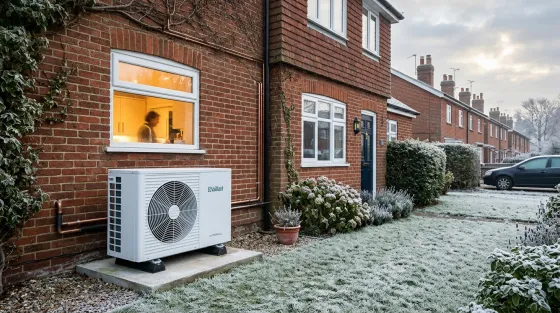
The government is on a mission to get heat pumps into as many homes as possible, and frankly, it is not being subtle about it. With generous grants, zero VAT, and new regulations nudging manufacturers in the right direction, the humble heat pump has gone from niche eco-gadget to mainstream contender. But is it actually worth ripping out your trusty boiler? Let us break it down.
So What Exactly Is a Heat Pump?
Think of a heat pump as a fridge running in reverse. Instead of pulling warmth out of your food and dumping it into your kitchen, it pulls warmth from the outside air (or ground) and pushes it into your home. Yes, even when it is freezing outside. During the January 2025 cold snap, 86% of heat pump owners reported their homes stayed perfectly warm. These units can operate in temperatures as low as -15°C to -25°C, so the British winter is hardly a challenge.
The clever bit is efficiency. A decent air source heat pump (ASHP) achieves a real-world seasonal coefficient of performance (SCoP) averaging 3.9. In plain English: for every unit of electricity you feed it, you get nearly four units of heat back. A gas boiler, by comparison, converts less than one unit of gas into one unit of heat. That is not a marginal improvement. That is a different league entirely.

What Does It Cost?
Here is where things get interesting. The average air source heat pump installation comes in at around £12,500 before grants. Ground source heat pumps (GSHPs), which require digging trenches or boreholes in your garden, sit between £20,000 and £35,000, with an average around £24,000.
But you should not be paying the full whack. The Boiler Upgrade Scheme (BUS) knocks £7,500 off the price of an air source or ground source heat pump, bringing that average ASHP cost down to roughly £5,000. There is also a newer £2,500 grant for air-to-air heat pumps. The scheme runs until 2028, with a record £295 million budget for 2025/26.
And there is more. 0% VAT applies to domestic heat pump installations until at least March 2027. Some mortgage lenders are sweetening the deal too, with Halifax and Lloyds offering £2,000 cashback and Barclays up to £1,000.
Running Costs: The Honest Picture
This is where the conversation gets nuanced, and where plenty of articles oversimplify things. At standard Ofgem price cap rates, an ASHP costs roughly £840 per year to run, while a gas boiler sits at about £835. That is near parity, not the dramatic saving some headlines suggest.
However, the picture shifts considerably depending on your circumstances:
- Replacing an old G-rated gas boiler? You could save around £260 per year on average.
- On a specialist heat pump tariff like Octopus Cosy? Heat pumps become up to 39% cheaper per unit of heat.
- Pair with solar panels and battery storage? Carbon Brief projects savings of up to £1,000 per year versus gas from April 2026 tariff projections.
It is worth noting the survey data tells conflicting stories. A Green Britain Foundation survey found 66% of heat pump owners reported higher heating costs, though Carbon Brief points out nearly half of those respondents installed during the 2021-23 energy price crisis, which skews the results. The government's own BUS evaluation survey found 37% of respondents saw their bills go down, with only 13% reporting they went up.
The Green Credentials
On the environmental front, the numbers are compelling. Heat pumps cut carbon emissions by approximately 85% compared to gas boilers using the current UK electricity grid mix. As the grid continues to decarbonise, that figure will only improve.
Longevity and Practicalities
A heat pump typically lasts 20 to 25 years, compared to 10 to 15 for a gas boiler. So while the upfront cost is higher, you are likely replacing it half as often. Installation takes around 2 to 3 days for an ASHP, or 1 to 2 weeks for a ground source system.
What Is Coming Next?
From 1 April 2026, the Clean Heat Market Mechanism kicks in. Large boiler manufacturers will need to ensure that 8% of their sales are heat pump installations. This is a clear signal: the transition away from gas is not a suggestion. It is policy.
The Verdict
Heat pumps are not a magic wand. If your home is poorly insulated, your savings will be modest at best. If you have got a relatively new, efficient gas boiler, the financial case for switching right now is thin. But if you are facing a boiler replacement anyway, live in a reasonably well-insulated home, and can take advantage of the BUS grant and 0% VAT, the maths starts looking rather attractive. Add solar panels and a smart tariff into the mix, and it becomes genuinely compelling.
The technology works. The grants are generous. The real question is whether your home is ready for one.
Read the original article at source.