
Diplomacy in Islamabad: US and Iran Talk Peace While Lebanon Burns
The first direct US-Iran meeting since 1979 took place in Islamabad amid a fragile ceasefire and mounting casualties across the region. Here is what happened.












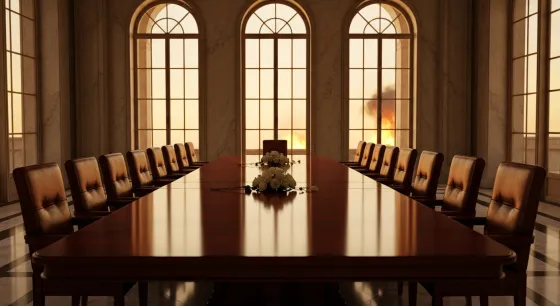
The World's Most Awkward Dinner Party
Picture this: the Vice President of the United States and the Speaker of Iran's parliament are both in Islamabad, both sitting down with Pakistan's Prime Minister Shehbaz Sharif, and both pretending the other lot isn't just down the corridor. Welcome to international diplomacy in 2026, where the stakes are existential and the seating arrangements are a nightmare.
On Saturday, JD Vance led the American delegation while Mohammad Bagher Qalibaf headed the Iranian side for what were initially described as separate talks brokered by Pakistan. The context? A war that has raged since 28 February, a fragile two-week ceasefire barely holding together, and fresh carnage in Lebanon threatening to unravel the whole thing.
Here is the twist, though. What started as parallel conversations reportedly became something far more significant later that day: the first direct, face-to-face meeting between US and Iranian officials since 1979. Let that sink in for a moment. It took a war, a global energy crisis, and Pakistan playing host to get Washington and Tehran in the same room.
The Human Cost So Far
The numbers behind these talks are grim. At least 3,000 people have been killed in Iran since the conflict began, with some trackers putting the figure closer to 3,546. In Lebanon, the Health Ministry has recorded 1,953 deaths. Israel has lost at least 26 people, a toll that continues to climb as the region braces for further escalation.

And then there was what many are now calling 'Black Wednesday'. On 8 April, the very day the ceasefire was announced, Israeli strikes hit Beirut and killed between 254 and 357 people, depending on which source you trust. The article's figure of more than 300 sits squarely in that range, and it marked the single deadliest day since the war began on 28 February. If you were looking for a sign that ceasefires in this part of the world are written in pencil, that was it.
Oil, Shipping, and Why Your Energy Bills Care
This conflict has never been confined to the battlefield. The Strait of Hormuz, that narrow waterway through which roughly a fifth of the world's traded oil passes on more than 100 ships daily, has become a chokepoint in every sense of the word.
Since the ceasefire, shipping through the strait has slowed to a trickle, with some reports suggesting only a handful of vessels have made the crossing. Iran reportedly re-closed the strait in response to the 8 April Lebanon strikes, adding yet another layer of complexity to an already volatile situation.
The impact on energy markets has been predictable and painful. Brent crude surged above $120 a barrel at the height of the crisis before correcting sharply after the ceasefire announcement. As of the weekend, prices appeared to be hovering around the $94 mark, still roughly 30% higher than pre-war levels when Brent sat at around $72. Whether that correction holds depends entirely on what happens in Islamabad and whether the strait reopens for commercial traffic.
Two Proposals, One Enormous Gap
Both sides came to Pakistan with homework done. Iran tabled a 10-point proposal; the Americans countered with a 15-point plan. The details of each remain closely guarded, but the broad strokes are familiar: security guarantees, withdrawal timelines, and the thorny question of what happens to Hezbollah's military infrastructure in Lebanon.
The US delegation was more heavyweight than initially reported. Alongside Vance, Washington sent Steve Witkoff and Jared Kushner, suggesting the Trump administration views these talks as a legacy-defining moment. Iran matched the seriousness, with Supreme National Security Council Secretary Ali Akbar Ahmadian and Central Bank Governor Abdolnaser Hemmati joining Qalibaf. When your central banker is at the peace talks, the economic pressure is clearly biting.
Lebanon: The Ceasefire Nobody Trusts
While diplomats talked in Islamabad, the situation in Lebanon threatened to make their efforts irrelevant. The 8 April strikes did not just kill hundreds of people. They shattered whatever fragile confidence existed that a ceasefire could actually hold.

This is not the first time Lebanon has been here. The November 2024 ceasefire between Israel and Hezbollah was supposed to create a framework for lasting calm. That framework is now in tatters, and the question of how to rebuild it sits at the heart of planned Israel-Lebanon negotiations set to begin on Tuesday in Washington.
Those talks will be watched closely, not least because the two-week ceasefire window creates genuine deadline pressure. If Islamabad produces a broad framework but Washington fails to address the Lebanon dimension, the entire edifice could collapse before the ink dries.
What Happens Next
The optimistic reading is that we are witnessing a genuine diplomatic opening. Direct US-Iran contact after 47 years is historically significant regardless of the outcome. Pakistan's role as an honest broker has been quietly effective, and the presence of senior figures on both sides suggests neither delegation flew to Islamabad for a photo opportunity.
The pessimistic reading is equally compelling. Black Wednesday showed that military operations continue regardless of diplomatic calendars. The Strait of Hormuz remains effectively closed, energy markets are jittery, and the two-week ceasefire clock is already ticking down. Lebanon's agony continues with no clear path to a durable settlement.
The truth, as ever, probably lies somewhere in between. These talks matter because the alternative, an open-ended conflict with global economic consequences, is simply too costly for anyone to sustain. But mattering and succeeding are very different things, and the gap between Iran's 10 points and America's 15 is likely measured in more than just bullet points.
For now, the world watches Islamabad and hopes that the people in those rooms are better at finding common ground than the evidence on the ground in Lebanon would suggest.
Read the original article at source.